A hose that matches a pump’s nominal pressure can still fail when pressure spikes, suction, heat, tight routing, incompatible fluids, or machine movement enter the job. By the end, you will have a practical specification for the hose, fittings, protection, testing, and installation checks your equipment requires.
Key takeaways
- Rate the complete assembly for peak dynamic pressure and pressure spikes.
- Match the hose to fluid type, temperature, suction conditions and required flow.
- Check tube, cover, electrical properties, fittings and quick couplings together.
- Inspect routing, cleanliness, bend radius and protection before commissioning.
Define the pressure, flow and service duty before choosing a hose
Record the highest dynamic pressure, not just the pump’s nominal pressure or relief-valve setting. Include pressure spikes from valve closure, accumulator discharge, cylinder deceleration, pump start-up, rapid load changes and water hammer. The complete assembly is limited by the lowest-rated hose, fitting, adapter or quick coupling.
| Operating information | What to record | Why it matters |
|---|---|---|
| Pressure | Normal working pressure, peak dynamic pressure and transient duration | The manufacturer’s working pressure must exceed the highest operating event |
| Flow | Required flow rate, direction and whether the line carries suction, discharge or both | Flow determines bore size; suction service needs vacuum-collapse resistance |
| Service duty | Continuous or intermittent operation, start-stop frequency, motion and expected pressure cycles | Static pressure rating does not prove cyclic durability |
| Temperature | Fluid temperature, ambient temperature and nearby heat sources | Heat can reduce pressure capability and damage seals or the hose cover |
| Connections | Port size, fitting type and assembly length | A restrictive bore or mismatched connection can create excess velocity and pressure loss |
For boom, mobile-equipment and hydraulic-drive service, obtain impulse-test data and compare the expected cycle severity with the hose’s qualified performance; ISO 6803 defines pressure-impulse testing as a distinct method. Do not select by burst pressure: burst pressure is a destructive qualification value, not an allowable operating limit.
Specify the hose’s working pressure, proof requirement and impulse performance separately. Then confirm the manufacturer’s pressure derating at the selected temperature.
Match the hose to suction, flow, temperature and fluid compatibility
A hose that handles discharge pressure can still collapse on the pump inlet. Specify a documented suction rating and vacuum-collapse resistance for any line exposed to vacuum; otherwise the tube can flatten, kink, or delaminate.
Use these checks to determine the construction:
- Bore and flow rate: Select the inside diameter from the required flow rate and the manufacturer’s velocity chart. An undersized bore increases velocity, heat and pressure loss; an oversized bore can slow actuator response and complicate priming.
- Suction duty: Choose a reinforced suction hose for inlet, return or tank-to-pump service. Do not substitute a standard pressure hose because its pressure rating looks sufficient.
- Temperature: Rate the hose for both conveyed-fluid temperature and surrounding heat. Exhaust or enclosure heat can damage the cover, reinforcement or fitting seals even when the fluid remains within its temperature limit. Apply the manufacturer’s pressure derating data at elevated temperature.
- Fluid compatibility: Match the tube or liner to the fluid and its concentration, then verify the cover and coupling seals. Incompatible fluid can swell the tube, soften the cover or cause leakage at the fittings.
Confirm the hose construction suits the duty’s movement and environment, not just its nominal bore. A hose with the correct bore can still fail if its tube material, reinforcement or seals are incompatible with the fluid, temperature or suction conditions.
Choose tube, cover and electrical properties for the environment
Choose the tube for the fluid and the cover for the hazard; neither choice follows from pressure rating alone. Check the exact fluid formulation, additives and operating temperature against the manufacturer’s compatibility table. NBR suits many petroleum-based hydraulic oils, while EPDM suits water-based fluids and resists weathering.
Natural rubber provides flexibility and abrasion resistance but has limited oil compatibility; synthetic rubber is not one universal material, so identify its specific compound.
| Cover property | Protects against | Specify when |
|---|---|---|
| Abrasion-resistant | Frames, rock and hose-to-hose rubbing | The route contacts structure or debris |
| Heat-resistant | Exhaust, manifolds, brakes and radiant heat | The hose passes near hot equipment |
| Flame-resistant | Direct flame and brief flame exposure | Fire risk exists around the equipment |
| Ozone-resistant | Cracking from sunlight and electrical ozone | The hose operates outdoors or near high-voltage equipment |
| Low-temperature | Stiffening and brittle cracking | Ambient temperature falls below the normal service range |
Rate temperature for both the conveyed fluid and the surrounding air. A hose within its fluid rating can still overheat at the cover, reinforcement or fitting seals; apply pressure derating from the hose manufacturer’s data.
Resolve electrical requirements as conductive, nonconductive or static-dissipative. These properties are not interchangeable. Verify the assembled hose, because fittings, paint, clamps and installation can interrupt continuity or grounding. Also check external hydraulic fluid, cleaning agents and chemicals against the cover and seals, not only the tube. Keep ends capped and interiors clean before installation.
Verify the complete hose assembly, not just the hose bore
A hose bore does not qualify an assembly. Verify the hose, fittings, adapters, seals and couplings as one pressure boundary before ordering.
1. Set the working pressure from the highest dynamic pressure, including valve closure, accumulator discharge, cylinder deceleration and pump start-up spikes. Request the manufacturer’s proof pressure and burst pressure values, but never select by burst pressure: it is a destructive qualification value, not an allowable operating limit.
2. For boom, mobile-equipment and hydraulic-drive service, request impulse-test results. Compare your expected pressure-cycle severity with the hose’s qualified impulse life; ISO 6803 treats pressure-impulse testing as a distinct method, so a static pressure rating alone is not evidence of cyclic suitability.
3. Check the pressure rating of every fitting, adapter, quick coupling, crimp sleeve and seal. The assembly is limited by its lowest-rated component, and the seal material must match the exact fluid formulation, additives and operating temperature.
4. Confirm the manufacturer’s minimum bend radius and inspect movement through the complete machine cycle, not only when parked. Check full articulation, boom extension, steering lock, suspension travel and implement movement for stretching, pinching, crushing or tighter bends.
5. Prevent torsion during installation and operation. Keep movement in the intended bending plane and use the hose layline to spot twist; an acceptable bend radius does not prevent reinforcement fatigue, cover separation or fitting leakage caused by twisting.
When requesting an assembly from Kanta Enterprises, provide the connection details, fluid, temperature and a movement sketch rather than only the nominal bore.
Related products
 | WATER SUCTION & DISCHARGE HEAVY DUTY HOSE WATER SUCTION & DISCHARGE HEAVY DUTY HOSE IS:3549 /1983 Type 2 Application: For dewatering and delivery purposes during reflooding, handling for waste water, sewerage and mud at maximum... View product → |
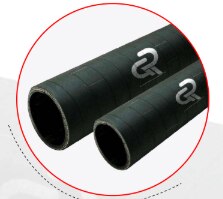 | Rubber Cement Grounting Hose As Per IS: 5137:1990 Lining: uniform seamless and extra thick tube of natural/synthetic/blend rubber compound of excellent abrasion resistance and... View product → |
Inspect routing, cleanliness and protection before putting equipment into service
Before energising the circuit, confirm that the installed hose remains clean, supported and within its movement limits. A parked machine proves little; failures often appear only under pressure, articulation or vibration.
1. Keep both ends capped until connection. Inspect the bore and fittings for dirt, rubber debris, moisture or preservation material, then flush the circuit using the equipment maker’s cleanliness procedure. Servo, proportional, hydrostatic-drive and high-pressure systems need especially strict particle control.
2. Route the hose without exceeding the specified minimum bend radius. Treat that radius as a limit, not a target: add allowance for dynamic movement, keep bends away from fittings, and prevent clamps from crushing the cover.
3. Remove torsion before tightening the connections. Align the hose in its intended bending plane and use its layline to reveal twist; a spiralling layline signals installation stress that can fatigue reinforcement and loosen fittings.
4. Cycle mobile equipment through steering lock, suspension travel, boom extension and implement movement. Look for stretching, pinching, abrasion, crushing and contact with hot or sharp parts. Fit a protective sleeve or shield where impact, heat or rubbing remains possible.
5. Specify restraint for stored-energy release and hose whip in the equipment risk assessment. Use clamps, shields, restraint devices and a hose whip-control system suited to the failure hazard; a whip check alone is not a complete safeguard.
Depressurise before adjusting any connection, and never search for a leak with your hand. Fluid injection through skin requires immediate emergency treatment.
Frequently asked questions
What pressure should you use when selecting a high-pressure hose?
Use the highest dynamic pressure, including spikes from valve closure, accumulator discharge, cylinder deceleration, pump start-up, rapid load changes and water hammer. Rate the complete assembly by its lowest-rated hose, fitting, adapter or quick coupling.
How do you match a hose to the operating fluid and temperature?
Confirm the hose tube material is compatible with the exact fluid, additives and concentration. Check the manufacturer’s temperature range at the actual pressure, then account for ambient heat, fluid temperature and suction conditions.
Why do hose fittings and couplings matter as much as hose bore?
A hose assembly is limited by its weakest component. Verify fitting size, connection type, pressure rating, crimp specification and quick-coupling rating instead of selecting the hose by bore alone.
What should you inspect before putting a hose assembly into service?
Check bend radius, routing, abrasion points, heat sources, twisting, clamping and protection. Flush or clean the assembly to remove debris, then inspect for damage, leaks and incorrect connections before pressurising the equipment.
Related products
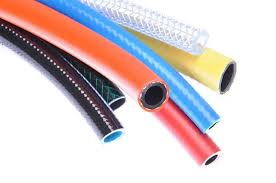 | Food Grade Brewery Suction & Discharge Hose Food Grade Brewery Suction & Discharge Hose Tube: White EPDM with UHMWPE Lining (Food Grade) Reinforcement: High Tensile synthetic piles with helical wire Cover: Blue, EPDM Weather, ozone and... View product → |
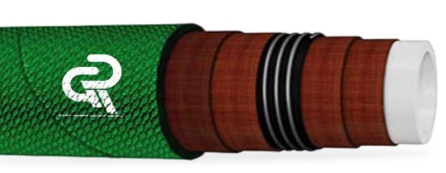 | CHEMICAL SUCTION & DISCHARGE HOSE CHEMICAL SUCTION & DISCHARGE HOSE Core: White color, Synthetic rubber with XLPE liner Reinforcement: High Tensile Synthetic Textile Cord with steel helix and 2 cross anti-static wire... View product → |
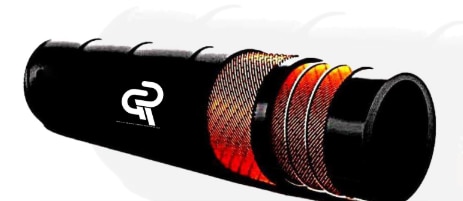 | OIL SUCTION & DISCHARGE HOSE (OUTER PLAIN SURFACE) OIL SUCTION & DISCHARGE HOSE (OUTER PLAIN SURFACE) IS 10733 Tube: Specially compounded oil resistant synthetic rubber Reinforcement: High tensile synthetic piles with helix steel wire and a copper... View product → |
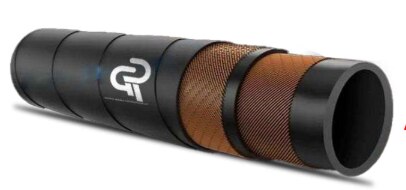 | Multi Purpose Suction & Discharges Hose Multi Purpose Suction & Discharges Hose Tube: Specially Compounded Synthetic Rubber, Black Reinforcement: High Strength Synthetic Plies with helix wire Cover: Black synthetic rubber cover... View product → |