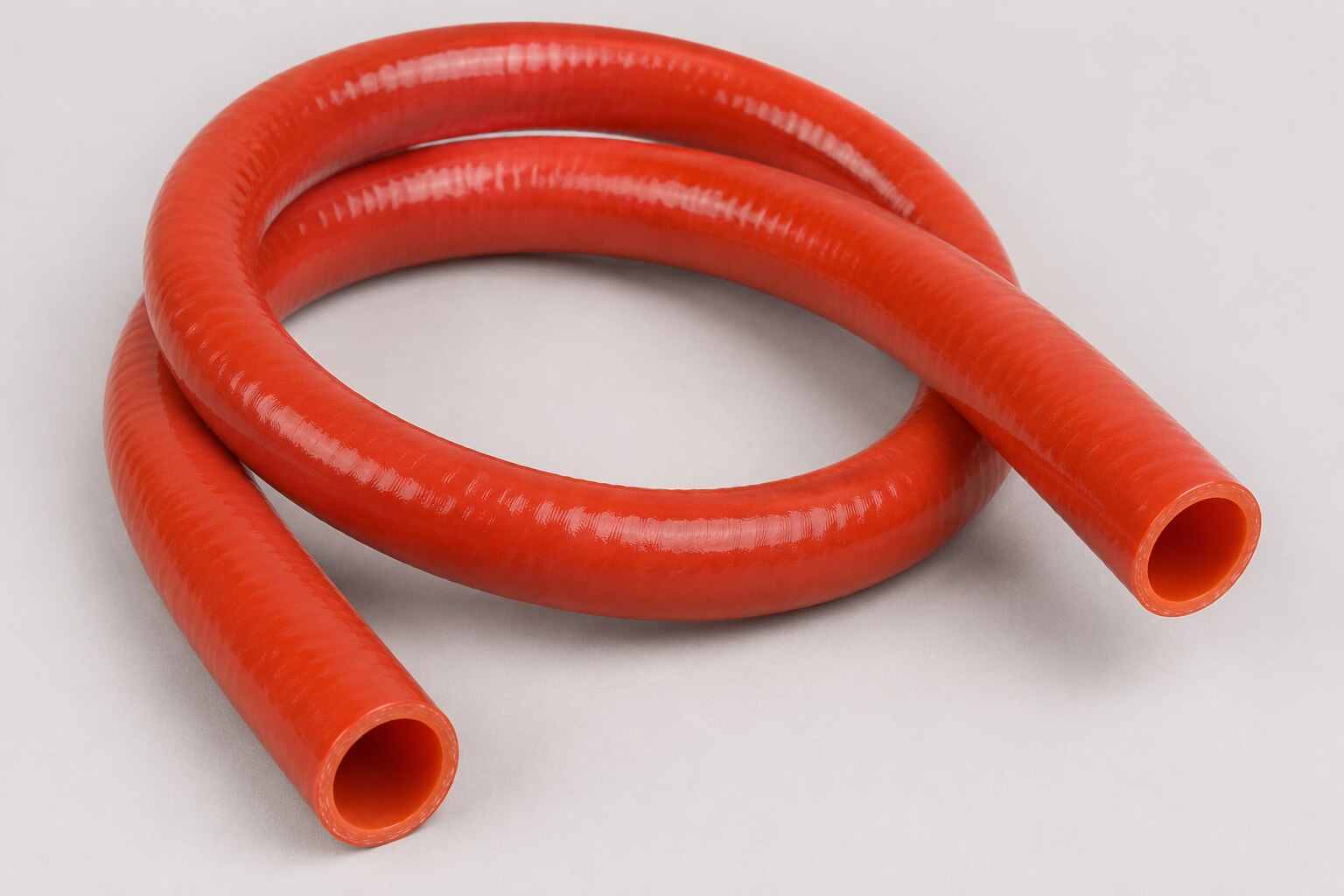
A silicone hose can tolerate intense heat yet fail through pressure derating, steam exposure, chemical attack, gas permeation or repeated thermal cycling. By the end, you will be able to match hose construction and material to the actual temperature, medium, pressure, vacuum, flow and installation conditions.
Key takeaways
- Use continuous temperature ratings, not short-term peak ratings, for equipment design.
- Check process-fluid compatibility before selecting silicone hose for heated service.
- Match reinforcement and wall thickness to pressure, vacuum and connection requirements.
- Inspect hot-service hoses for softening, cracks, bulges, clamps and heat damage.
How temperature changes a silicone hose’s working limit
A silicone hose temperature range, such as -60 to +200 °C, is not a universal working limit. For equipment design, use the continuous temperature rating, not the higher intermittent peak temperature. The true limit also depends on reinforcement, wall thickness, pressure, vacuum, duty cycle and process fluid.
1. Identify the hottest temperature the hose will experience continuously, including heat soak after shutdown. Compare it with the hose’s continuous temperature rating, not its short-duration maximum.
2. Request a pressure-versus-temperature table for the exact construction. A hose rated for 10 bar at room temperature may require substantial pressure derating near its maximum temperature.
3. Check the permitted duration and number of hot-water, sterilization or steam cycles. Intermittent steam exposure does not qualify a hose for continuous saturated-steam service; use the supplier’s stated steam rating and cycle limit.
4. Map the temperature changes, not only the peak. Thermal cycling and heat ageing expand and contract the tube, braid, fittings and clamps, causing loosening, kinks, liner fatigue or leaks below the published maximum.
A brief excursion above the continuous rating is a deviation to investigate, not extra design capacity. Also check gas permeability: silicone can be thermally suitable yet allow unacceptable diffusion of oxygen, nitrogen, carbon dioxide, refrigerants or moisture. Heat resistance alone does not prove flame rating or electrical-insulation suitability.
Why the process medium matters as much as the heat
A hose that survives hot air can fail in hot fluid. Dry heat versus hot water changes heat transfer, pressure, permeation, and chemical attack, so an ambient-temperature rating cannot predict service life.
Check the medium before approving the hose:
1. For dry air or heated gas, confirm the continuous temperature, peak temperature, thermal cycling, and gas-permeation limit. Silicone tolerates ozone, ultraviolet exposure, and weathering, but its relatively high permeability can allow oxygen, nitrogen, carbon dioxide, refrigerants, or moisture to diffuse through the wall.
2. For hot water, verify the hose’s pressure rating at the operating temperature and its resistance to repeated heating and cooling. Hot-water cleaning may be acceptable even when continuous steam service is not.
3. For steam, require documented steam hose compatibility, including saturated-steam pressure, cycle duration, sterilization frequency, and cooldown requirements. Intermittent sterilization does not qualify a general-purpose silicone hose for continuous high-pressure steam.
4. For oils and fuels, demand oil and fuel resistance data for the exact fluid and temperature. Silicone can swell, lose strength, or suffer surface damage in oils, fuels, and some solvents.
5. For cleaning systems, check CIP chemicals and silicone hose compatibility at the stated concentration, temperature, exposure time, and pressure. Dilute aqueous chemicals are not equivalent to concentrated acids or alkalis.
| Medium | Main concern | Evidence to request |
|---|---|---|
| Dry heat or gas | Permeation and ageing | Gas-specific permeation limit |
| Hot water | Pressure and thermal cycling | Temperature-based pressure rating |
| Steam | Construction and cycle damage | Supplier steam-cycle rating |
| Oil, fuel, or chemicals | Swelling and strength loss | Fluid-specific compatibility data |
How construction controls pressure, vacuum and fit
Choose construction from the worst combination of differential pressure, vacuum, flow and routing space—not from the temperature rating alone.
| Construction | Pressure and vacuum behaviour | Space and fit trade-off |
|---|---|---|
| Unreinforced silicone tubing | Suits low-pressure transfer; can balloon, kink or collapse under differential pressure | Smallest outside diameter and tightest potential routing, but poor support in bends |
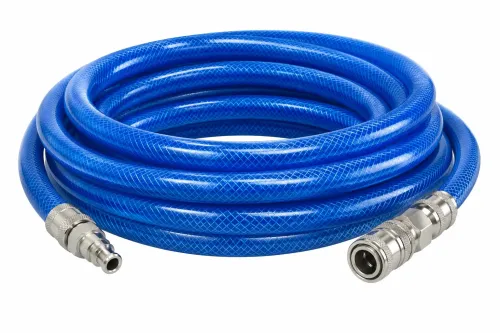
| Braided silicone hose | Handles higher pressure and resists expansion better than plain tubing | Larger outside diameter, reduced flexibility and a larger minimum bend radius |
| Wire-reinforced silicone hose | Provides the strongest vacuum resistance and helps prevent wall collapse | Heavier, stiffer and harder to route around compact equipment |
Size the bore from the actual inside diameter, flow rate and allowable pressure drop. An undersized hose raises velocity and pumping loss; an oversized hose wastes space and can sag, while a thick wall increases the outside diameter and affects clamp or fitting selection.
Use the manufacturer’s pressure-versus-temperature table for the exact construction and dimensions. Pressure derating at elevated temperature can reduce a room-temperature rating substantially, so never apply that catalogue figure near the process limit.
Check the bend radius under operating vacuum, not only on an empty bench. A soft hose can remain flexible yet flatten in a tight turn. Measure the connection outside diameter, barb length and clamp clearance, then confirm the hose ID grips the fitting without forcing a kink.
Allow straight length at each connection and movement for thermal expansion.
How to install and inspect a hose near heat
Install the hose with room to move, not pulled tight between fixed fittings. Silicone expands and contracts during heating and cooling; a rigid route transfers that movement into the liner, braid, clamps, and connections.
1. Measure the route against the hose’s minimum bend radius. Use a long-radius elbow or reposition the fitting instead of forcing a tight turn. A soft hose can still kink, flatten, or collapse under vacuum.
2. Set support spacing from the hose manufacturer’s instructions, then add support near each fitting and beside the heated section. Prevent sagging, rubbing, and contact with hot surfaces; use supports that do not crush the wall.
3. Allow a straight expansion loop or sliding support for thermal expansion. Keep the hose clear of sharp edges, heating elements, exhaust paths, and moving machinery. Do not use the hose to carry the weight of valves or rigid pipe.
4. Position clamps behind the hose bead or fitting shoulder, not on the bend or unsupported hose end. Tighten enough to seal without cutting the silicone; retighten only after the first heat cycle if the connection has settled.
5. Confirm the pressure rating at the actual operating temperature, including startup, shutdown, vacuum, and cleaning cycles. Near energized equipment, assess voltage, wall thickness, tracking, and flame performance separately; heat resistance is not an electrical or flame rating.
Perform hose inspection after installation, after the first few thermal cycles, and at scheduled shutdowns. Replace the hose when you find cracks, blisters, hardening, discoloration, exposed braid, flattening, clamp migration, weeping, or a loose fitting.
When silicone is the right choice—and when it is not
Choose silicone only after matching the hose to the medium, mechanical load and continuous temperature. A room-temperature pressure rating is not valid near the material limit; require the exact construction’s pressure-versus-temperature table.
| Material | Main advantage | Where it beats silicone | Main warning |
|---|---|---|---|
| Silicone versus EPDM | Hot-water, ozone and weather resistance | Continuous steam or demanding hot-water service when the hose has a dedicated EPDM steam construction | Lower flexibility and a less suitable choice for some dry-heat applications |
| Silicone versus NBR | Oil, fuel and grease resistance | Petroleum-based fluids and abrasion-prone handling | NBR usually gives up silicone’s broad high-temperature flexibility |
| Silicone versus Viton | High-temperature oil and chemical resistance | Hot oils, fuels and aggressive chemical service | Higher cost and greater stiffness can complicate routing |
| Silicone versus PTFE | Chemical inertness and low friction | Solvents, corrosive chemicals and very clean fluid paths | PTFE is less forgiving of tight bends and needs suitable reinforcement |
Silicone is the better fit for clean hot air, thermal cycling, outdoor exposure and cold-start flexibility, provided abrasion, tearing and sharp edges are controlled. Do not select it for continuous saturated steam unless the supplier states the steam temperature, pressure and sterilization-cycle limit.
For energized equipment, heat resistance does not prove flame rating or electrical insulation suitability. Check voltage, wall thickness, tracking and flame-performance requirements separately.
Ask Kanta Enterprises for the tube material, reinforcement, bore, wall thickness, fittings and temperature-specific pressure table together; a material name alone cannot confirm service suitability.
Frequently asked questions
How does temperature affect a silicone hose’s working limit?
Design around the continuous temperature rating. The actual limit also depends on reinforcement, wall thickness, pressure, vacuum, duty cycle and exposure time.
Why does the process medium matter as much as heat?
A hose can tolerate the process temperature yet fail when the fluid attacks silicone, swells the wall, extracts additives or reduces reinforcement strength. Check compatibility for the exact medium and concentration.
How do construction details control pressure, vacuum and fit?
Braided or fabric reinforcement improves pressure resistance, while wall thickness and hose geometry affect vacuum performance. Confirm the hose’s pressure, vacuum, bend-radius and connection specifications.
When is silicone hose the right choice?
Silicone suits clean, flexible, high-temperature air, water, light chemical and some food or pharmaceutical applications when the specification confirms compatibility. Choose another elastomer when oil, fuel, abrasive solids or high-pressure hydraulic service dominates.