A Viton seal is suitable for demanding service only when its FKM compound, geometry, and operating conditions match one another. By the end, you will know how to compare FKM with other elastomers, check chemical and temperature limits, specify the seal design, and request evidence before approval.
Key takeaways
- Choose FKM for mineral oils, fuels, and high-temperature hydrocarbon service.
- Check chemical compatibility before using Viton with ketones, amines, or hot steam.
- Match seal hardness and profile to pressure, movement, clearance, and gland dimensions.
- Request compound details, temperature limits, batch traceability, and inspection records before approval.
Why FKM performs well in hydrocarbon and high-temperature service
A Viton rubber seal suits hydrocarbon service because FKM fluoroelastomer contains a fluorine-rich polymer structure that limits swelling, softening, and volume change. Its hydrocarbon resistance covers mineral oils and fuels, lubricating oils, hydraulic fluids, diesel, gasoline, and many aromatic hydrocarbons.
Standard compounds commonly support continuous service around -20 to 200 °C, although the actual limit belongs to the compound, not the Viton name.
| Elastomer | Strength in service | Important limitation |
|---|---|---|
| FKM | Mineral oils, fuels, many lubricants, elevated temperature | Check hot water, steam, amines, concentrated alkalis, acids, and polar solvents |
| EPDM | Hot water, steam, ozone, weathering | Poor choice for petroleum oils and fuels |
| NBR | Many oils, fuels, and hydraulic fluids at moderate temperatures | Narrower heat, ozone, and weathering range |
| Silicone | Very high and low temperatures | Weaker abrasion, tear, and dynamic-wear performance |
| Natural rubber | High elasticity and tear resistance | Poor resistance to oils, fuels, heat, ozone, and ageing |
Do not treat chemical resistance as proof of dynamic suitability. A reciprocating or rotary FKM seal still needs compatible lubrication, surface finish, speed, gland fill, pressure control, and heat removal; a static flange seal can succeed where a poorly lubricated shaft seal fails.
Peroxide-cured and bisphenol-cured grades also differ, particularly in hot-water, steam, acid, and compression-set service. Near the low-temperature limit, verify elastic recovery rather than simply checking whether the rubber remains intact.
When Viton is the wrong choice for the fluid or temperature
A seal that survives oil at 180 °C can fail quickly in hot water and steam. Ordinary FKM is also a poor choice for concentrated alkalis, certain amines, ammonia, and polar solvents such as ketones, low-molecular-weight esters, and ethers.
Confirm Viton chemical compatibility against the real service, not the trade name. “Viton” identifies a brand; FKM is the generic designation in ASTM D1418 and ISO 1629. Ask for data on the proposed compound, cure system, hardness, and these conditions:
- The exact fluid name, additives, concentration, and contamination level
- Normal temperature, minimum temperature, peak temperature, and duration of each exposure
- Continuous contact time, shutdown soaking, and the number of temperature cycles
- The pressure, pressure cycling, and whether the seal contacts the fluid on one side or both
- The manufacturer’s compatibility rating or immersion-test results for that specific FKM compound
Do not treat peroxide-cured and bisphenol-cured FKM as interchangeable. Peroxide-cured grades often improve hot-water, steam, acid, and high-temperature compression-set resistance, but the compound data must confirm the choice. Standard FKM is commonly limited to about -20 to +200 °C; near the low end, check elastic recovery, not merely whether the rubber remains intact.
Request a low-temperature grade when the seal must maintain contact pressure below its rated range.
How to match the seal design to pressure, movement, and the gland
Choose the design by motion, pressure direction, clearance, and available gland dimensions—not by the FKM name alone. For static sealing, calculate O-ring squeeze from the groove depth and seal cross-section; too little loses contact, while too much accelerates compression set. Measure bore, rod or shaft diameter, groove width, diametral clearance, pressure, temperature, and surface finish.
| Option | What it means | When it applies |
|---|---|---|
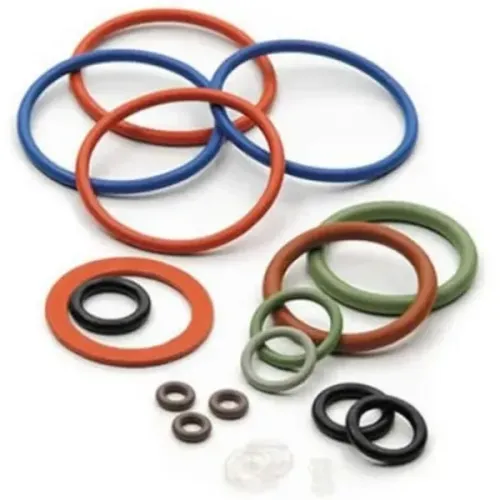
| Static O-ring | An elastomer ring compressed in a groove | Fixed flanges, covers, plugs, and housings with no intended movement |
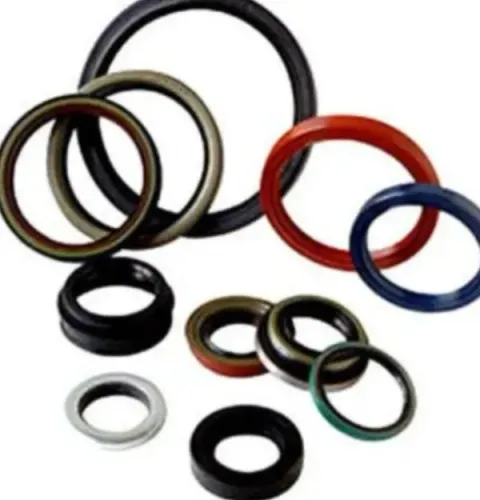
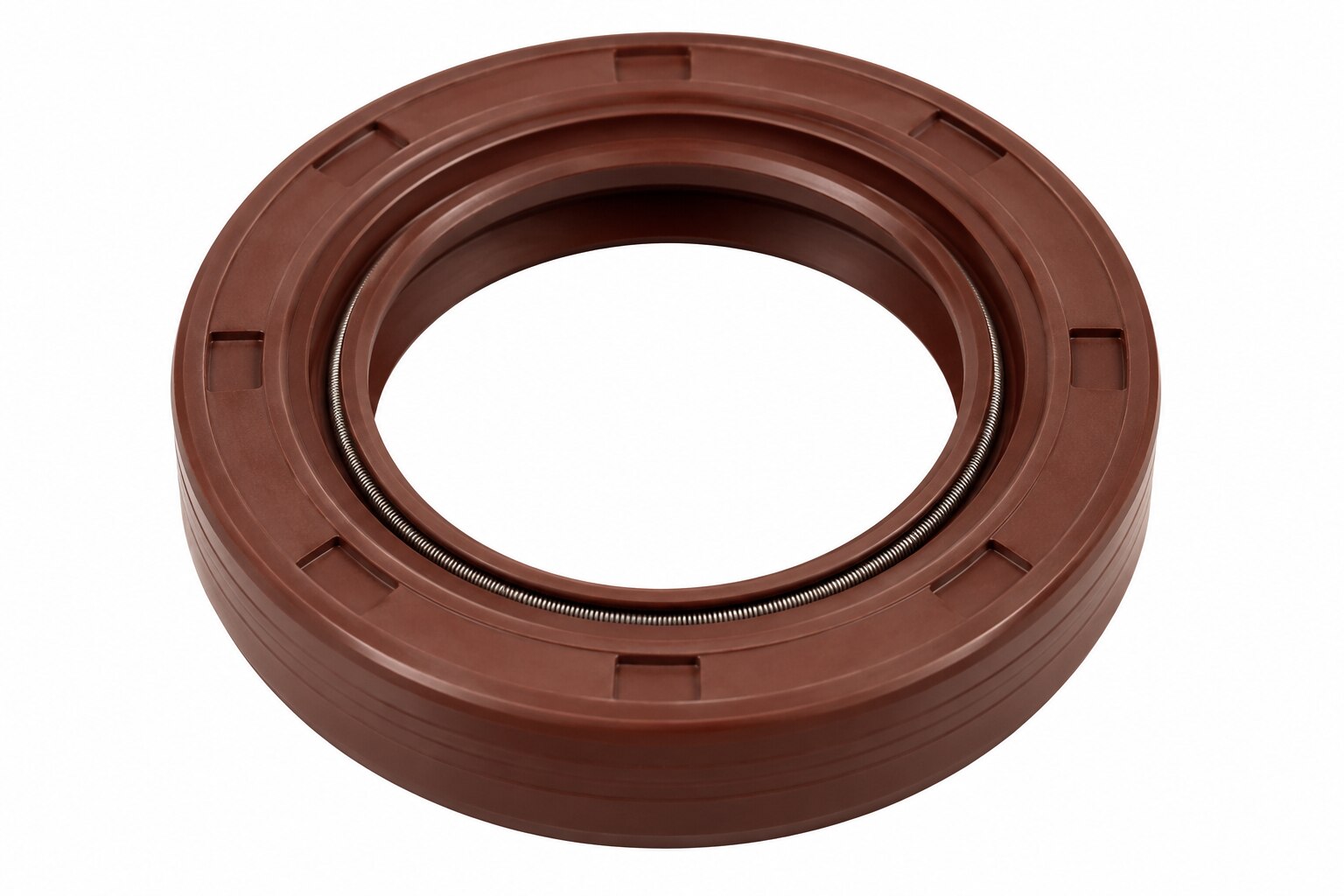
| Shaft oil seal | A lip seal running on a rotating shaft, usually with a spring | Oil retention or contaminant exclusion at a rotary shaft; verify speed, lubrication, shaft finish, and runout |
| Hydraulic rod seal | A pressure-oriented lip or energized seal | Reciprocating rods and pistons; match pressure, stroke speed, lubrication, temperature, and extrusion clearance |
| Bonded seal | An elastomer bonded to a metal washer | Static sealing under a bolt head, threaded port, or hydraulic fitting |
| Sheet gasket | A cut sheet compressed between broad faces | Large flanges, irregular joints, or assemblies where an O-ring groove is impractical |
High pressure increases extrusion risk. Reduce clearance, select suitable hardness, control gland fill, and add an extrusion backup ring when the pressure-clearance-temperature combination demands it. Rotary and reciprocating seals also need heat control and lubrication; an FKM compound that seals a flange can fail quickly on a dry shaft.
Specify rapid-gas-decompression qualification for high-pressure gas, CO2, or hydrogen service.
How installation and failure inspection determine service life
A leak that appears after installation does not prove chemical incompatibility. Compare the seal’s condition with the gland, movement, pressure, temperature, and handling record before assigning the cause.
Use this shutdown inspection checklist:
- Confirm the groove is clean, undamaged, correctly filled, and free from sharp edges or burrs.
- Check seal installation for twisting, cuts, pinching, contamination, and inadequate compatible lubrication.
- Measure extrusion clearance, gland dimensions, shaft finish, alignment, speed, and temperature at the seal.
- Look for compression set: a flattened cross-section that no longer springs back after removal.
Match visible damage to the failure mechanism:
- Design error leaves uniform extrusion, nibbling, or extrusion and abrasion on the low-pressure side; reduce clearance or add a backup ring.
- Chemical attack causes swelling, softening, cracking, stickiness, discoloration, or mass loss; compare the actual fluid, concentration, and exposure time with compound data.
- Excess heat produces hardening, loss of elasticity, surface cracks, and severe compression set; check peak temperature and heat removal.
- Pressure damage includes extrusion, cuts, and blistering. Blisters or internal splits after high-pressure gas service point to rapid gas decompression and require a qualified RGD compound.
- Handling damage shows one-sided cuts, scratches, twists, or installation marks without uniform chemical or thermal deterioration. Replace the seal and correct the fitting method.
What to request before approving a Viton seal
Request the actual FKM compound designation, not merely “Viton.” FKM is the generic name in ASTM D1418 and ISO 1629; the compound choice controls temperature, chemical, dynamic-service, and pressure performance.
Ask the supplier for:
- A technical data sheet stating the FKM compound grade, cure system, hardness and dimensional tolerances.
- A batch-specific test certificate showing measured hardness, tensile or compression results, cure condition, and test methods.
- Batch traceability linking the seal, sheet, or gasket to its compound batch, manufacture date, and inspection record.
- A compatibility statement covering your fluid, concentration, operating and peak temperature, pressure cycling, movement, and exposure time.
| Evidence or product choice | What it verifies | Demand a specific answer when |
|---|---|---|
| Compound grade and cure system | The proposed FKM is a defined formulation, not an unidentified colour or trade name | The fluid includes steam, concentrated alkali, amines, polar solvents, or organic acids |
| Hardness, tolerances, and drawing | The seal will fit the gland and resist extrusion | Pressure, temperature, or clearance is high |
| Compatibility chart or test report | The compound suits the actual chemical and temperature | The seal is dynamic or continuously exposed |
| RGD-qualified compound and pressure-cycle data | Resistance to rapid gas decompression | Service involves high-pressure gas, carbon dioxide, or hydrogen |
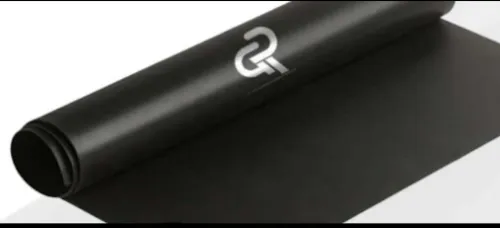
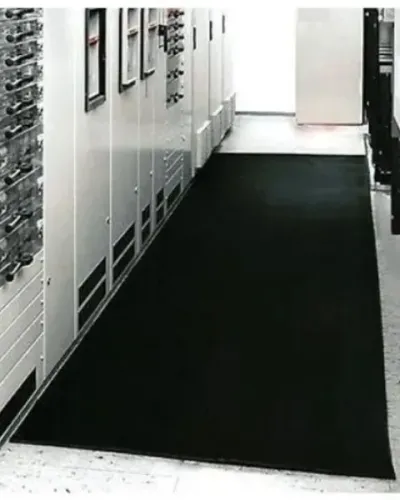
For a sheet or gasket quotation, Kanta Enterprises can help you compare the requested compound and dimensions against the application rather than treating colour as proof of grade. Reject any offer that provides only “Viton,” a colour, or a generic temperature range without traceability and test evidence.
Related product
 | Viton Rubber Sheet Technical Specifications: • Tensile Strength: 8.0 MPa • Specific Gravity: 1.95 (+0.05) • Elongation at Break: 200% • Temperature Range: -40°C to... View product → |
Frequently asked questions
Why does FKM perform well in hydrocarbon and high-temperature service?
FKM has a fluorine-rich polymer structure that limits swelling, softening, and volume change in mineral oils, fuels, lubricating oils, hydraulic fluids, diesel, gasoline, and many aromatic hydrocarbons.
When is Viton the wrong choice for a fluid or temperature?
Do not approve Viton without checking the exact fluid and operating temperature. FKM is unsuitable for some ketones, low-molecular-weight esters and ethers, certain amines, and hot-water or steam service.
How should you match a Viton seal to pressure, movement, and the gland?
Select the seal profile, hardness, clearance, and gland dimensions for the pressure and movement. A seal designed for static service can fail when used in dynamic motion.
How do installation and failure inspection affect Viton seal life?
Use clean, undamaged grooves, remove sharp edges, lubricate when compatible, and avoid twisting or stretching. Inspect cuts, extrusion, compression set, swelling, cracking, and abrasion to identify the failure cause.
What should you request before approving a Viton seal?
Request the FKM compound or grade, hardness, operating temperature range, fluid-compatibility data, dimensions, batch number, certificate of conformity, and inspection records.