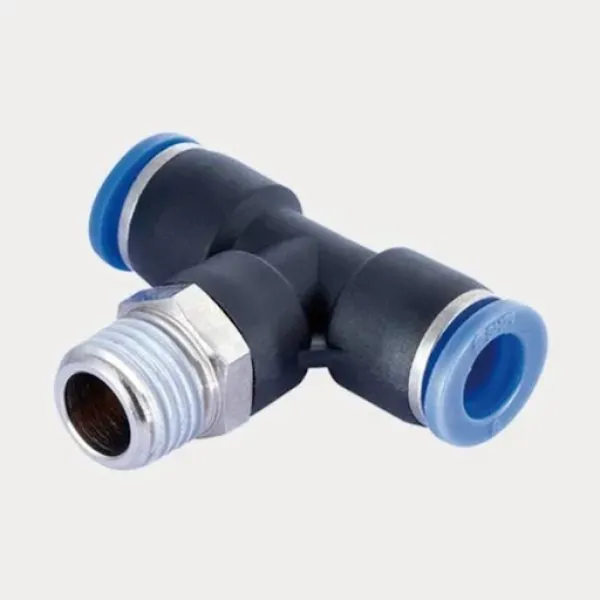
Push fittings have transformed pneumatic installations by making tube connections faster, simpler, and more reliable. Instead of requiring complex assembly procedures, these fittings allow technicians to connect and disconnect tubing with minimal effort.
For maintenance engineers and industrial buyers, understanding how push fittings work can improve installation quality while reducing machine downtime.
What Are Push Fittings?
Push fittings are mechanical connectors designed for quick installation of pneumatic tubes.
The tubing is simply inserted into the fitting, where an internal gripping mechanism securely holds it while creating an airtight seal.
This design makes maintenance significantly faster than conventional threaded connections.
Common Applications
Push fittings are widely used in:
- Pneumatic machinery
- Packaging equipment
- Industrial automation
- Robotics
- Assembly lines
- Air compressor systems
- Textile machinery
- Food processing equipment
- Material handling systems
These industries benefit from quick maintenance and dependable air connections.
Advantages of Push Fittings
Fast Installation
Connections can be completed within seconds without specialized tools.
Reduced Downtime
Quick replacement minimizes production interruptions during maintenance.
Leak-Free Connections
Quality fittings help maintain compressed air efficiency.
Easy Maintenance
Disconnecting tubing is straightforward when repairs or upgrades are required.
Versatile Configurations
Push fittings are available in straight, elbow, tee, reducer, and multiple-port designs.
Selecting the Right Push Fitting
Important considerations include:
- Tube size
- Operating pressure
- Thread type
- Working temperature
- Material compatibility
- Environmental conditions
Matching these specifications ensures dependable performance.
Installation Tips
For best results:
- Cut tubing squarely.
- Remove burrs before insertion.
- Push tubing completely into the fitting.
- Perform leak testing after installation.
- Avoid side loading on the connection.
- Replace damaged fittings promptly.
Proper installation improves connection reliability.
Common Problems and Their Causes
Some frequently encountered issues include:
- Air leakage due to incomplete insertion
- Damaged tubing ends
- Incorrect tube size
- Excessive vibration
- Worn internal gripping components
- Contamination inside fittings
Routine inspections help identify these issues before they affect production.
Manufacturers such as Kanta Enterprises supply push fittings designed for industrial pneumatic applications across Nagpur, supporting engineering companies, OEM manufacturers, and maintenance teams seeking reliable compressed air connections.
Choosing quality push fittings simplifies maintenance, improves pneumatic system performance, and contributes to more efficient industrial operations.
Keywords