Small-diameter tubing can appear straightforward, but specifications matter considerably once it becomes part of industrial machinery, instrumentation or process equipment. A Silicon Tube may be selected for applications where flexibility and temperature performance are important, yet dimensions alone do not determine whether a tube will work correctly.
Industrial buyers and OEM teams in Nagpur should compare several characteristics before approving a product for equipment use.
Check inside and outside diameter together
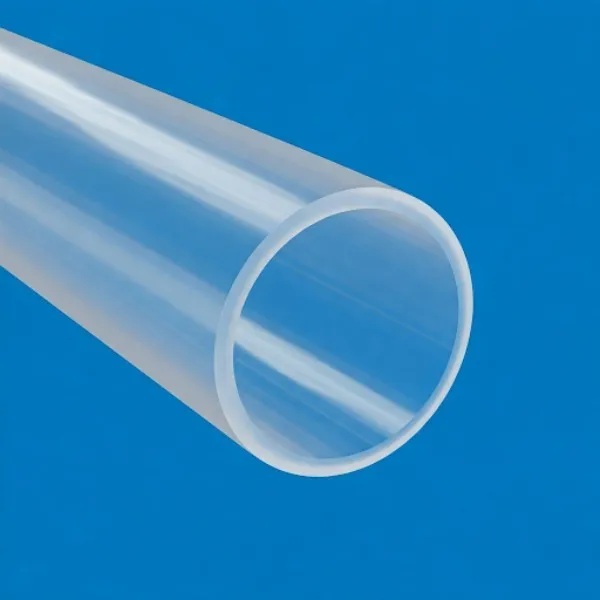
The inside diameter affects flow, while the outside diameter can influence how the tube fits into connectors, clamps and equipment.
Ordering by only one dimension can result in incompatibility with the existing installation.
Wall thickness should also be considered because it affects flexibility and mechanical behaviour.
Compare temperature requirements
Operating environments vary widely. Tubing near heated equipment can experience a higher ambient temperature than the fluid flowing through it.
Both conditions should be evaluated.
Buyers should distinguish between continuous operating temperatures and occasional peaks where the product specification provides separate limits.
Evaluate hardness and flexibility
Two tubes with similar dimensions can feel and perform differently because material hardness varies.
A softer tube may provide greater flexibility in certain installations, while the equipment design may require different mechanical characteristics.
The correct choice depends on routing, connection method and application demands.
Consider the medium being transferred
Air, water and process fluids can create different compatibility requirements. If tubing will carry a specific fluid, its material suitability should be checked against that medium and its operating temperature.
Where hygienic, laboratory, food processing or other regulated applications are involved, buyers should also verify the product specifications and documentation relevant to the intended use.
Avoid choosing solely by colour
Colour is a convenient visual identifier, but it does not establish material grade, temperature capability, dimensions or suitability.
Two tubes can look almost identical while having different technical properties.
For OEM procurement, maintaining written specifications reduces dependence on visual matching and makes repeat purchases easier.
Examine the connection method
Tubing should work with the intended connectors without excessive force, looseness or deformation. The tube dimensions and fitting design therefore need to be considered together.
This is especially important in equipment containing multiple pneumatic, fluid or utility lines in compact spaces.
Kanta Enterprises in Nagpur supplies hoses, tubing, fittings and industrial rubber products for engineering and maintenance requirements. Providing dimensions, operating conditions and application details when requesting Silicon Tube can help the supplier identify options that align more closely with the intended use.
For manufacturers across Maharashtra, standardising tubing specifications can also simplify inventory management. Instead of purchasing based on appearance each time, maintenance and procurement teams can refer to documented dimensions and operating requirements.
Industrial tubing may be a relatively small component, but an unsuitable choice can interrupt an entire machine. Comparing dimensions, temperature, flexibility, medium compatibility and connections gives buyers a practical way to make a better selection.
Keywords